P
Pai Gow Poker 牌九
Theme
Lacquer
Light Gold
Ivory
Play ▸
A Beginner's Field Guide on

Pai Gow Poker

split seven cards · beat the house twice

An introduction to the rules, the house way, and the math. You're dealt seven cards, you split them into a five-card high hand and a two-card low hand, and you have to beat the dealer on both to win.

Scroll to deal
Section 01 · Start Here

Pai Gow Poker in three minutes.

Pai Gow Poker is a slow, social game built on standard poker hand rankings. You're dealt seven cards. Your only job is to split them well — the rest is comparison against the dealer.

01

What is the game?

A 53-card deck (52 + one Joker) is dealt: seven cards to you, seven to the dealer. You split your seven cards into two hands — a five-card high hand and a two-card low hand. The five-card hand must outrank the two-card hand.

02

What do the cards count?

Standard poker. The five-card hand is ranked the same way as in any poker game — pairs, straights, flushes, full houses. The two-card hand can only be a pair or two high cards.

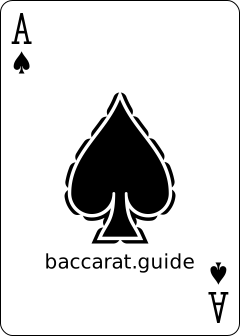
Ace of Spades
= A high
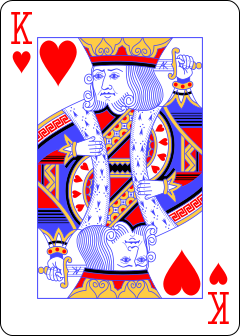
King of Hearts
= K high
Joker
= wild·ish

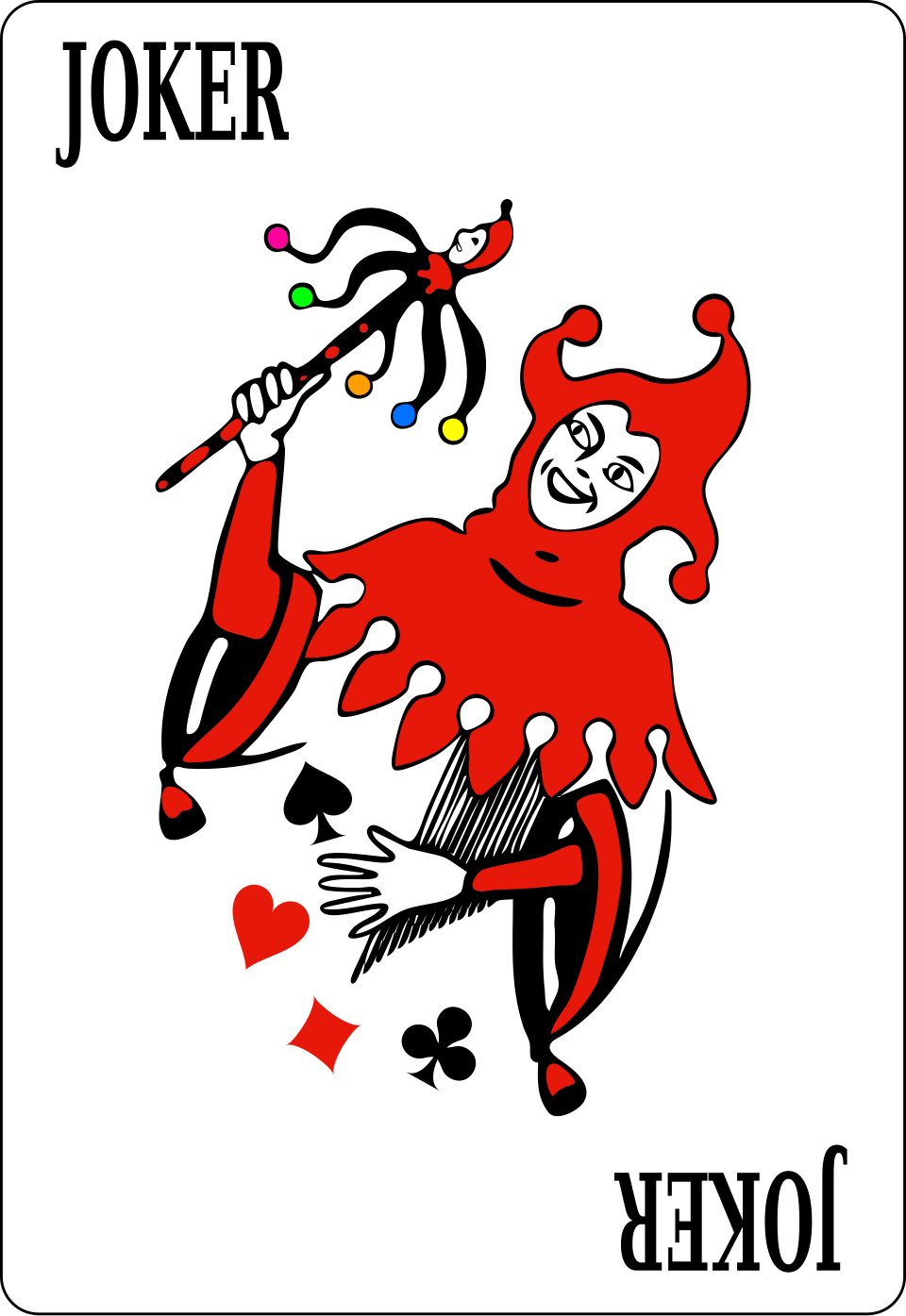
Joker = an Ace, or completes a straight, flush, straight flush, or royal flush. Otherwise it's just an Ace.

Best 5 + best remaining 2 but the 5-card hand must outrank the 2-card hand
03

What happens at the table?

  1. Place your bet. One wager, before the deal.
  2. You and the dealer each get seven cards, face down.
  3. Set your hand: pick two cards as your low hand. The other five are your high hand.
  4. Dealer reveals and splits using a fixed house way. Both your hands are compared to the dealer's. Win both → win. Win one → push. Lose both → lose.
Try a hand in the simulator ▸
Section 02 · The Cards

A standard deck — plus one Joker.

Pai Gow Poker uses the familiar 52-card deck and adds a Joker — 53 cards in total. Three of the cards in this deck behave a little differently than you'd expect. Hover any of the face-up cards for the rules.

Joker
The 53rd card
Joker · semi-wild
Plays as an Ace by default. The only ranks it can substitute for are the ones needed to complete a straight, a flush, or a straight flush.
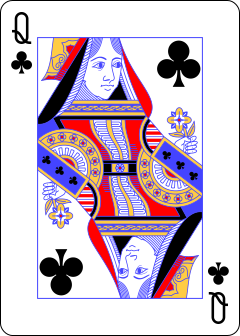
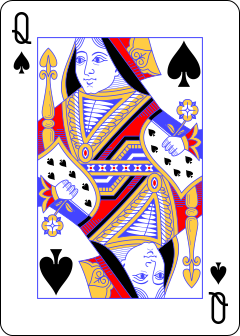
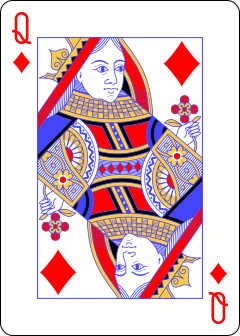
Queen of Spades
Standard face card
Queen · rank 12
No special rules — counts as a Queen in every comparison. Pairs of Queens or higher are the threshold for the house way's two-pair split decision.
Ace of Spades
Highest single card
Ace · rank 14 (or 1)
Plays high in straights (A-K-Q-J-10) and low in the wheel (A-2-3-4-5 — the second-strongest straight). Combined with the Joker and the other three Aces, makes Five Aces: Pai Gow's invented top hand.
53 cards · 52 + Joker · hover the face-up cards
A quirk worth memorizing
In most casinos, the second-highest straight is A-2-3-4-5 — beaten only by A-K-Q-J-10. So an Ace-low "wheel" outranks a King-high straight. Worth knowing when you're choosing how to set a hand.
Section 03 · The Table

Your seat at the table.

Scroll through the six steps below to walk a single hand — from wager to settlement, with the seven-card deal and the split in between.

Step 01 of 06
Place your wager
A single bet, posted before the deal. Pai Gow Poker has no side bets you should care about — keep it simple.
Section 04 · One Full Hand

Anatomy of a single hand.

Every Pai Gow Poker hand is the same five steps: deal, set, dealer reveals, dealer sets the house way, compare. The only choice you get is how you split — and that one choice is the whole game.

The deal · seven each, face down
Dealer deals seven cards to every player and seven to themselves. Cards stay face-down until everyone has set their hand.
Your seven cards
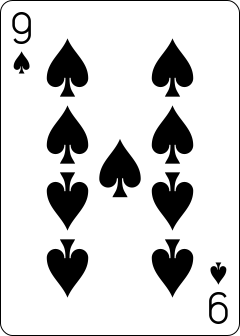
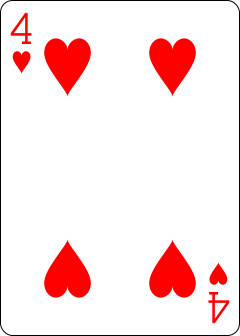
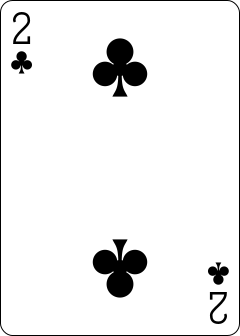
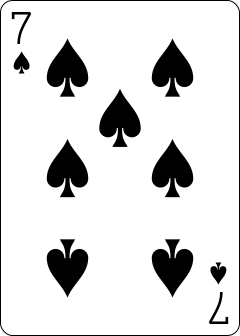
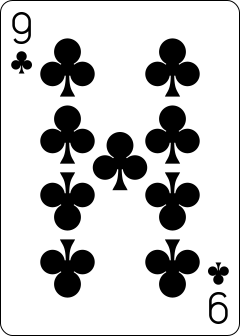
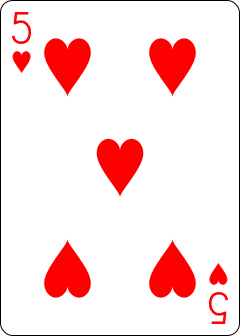
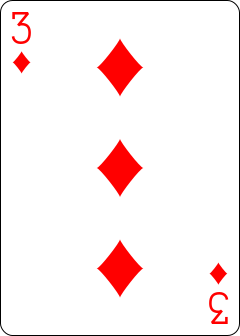
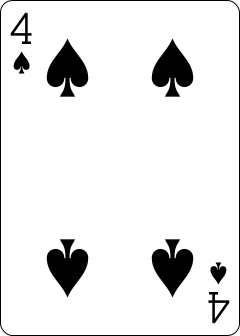
A♠ K♥ Q♣ 9♦ 9♠ 4♥ 2♣
Set your hand · split 5 + 2
Pick the two cards for your low hand. The other five form your high hand. The high hand must outrank the low hand — set them backwards and the hand is fouled (automatic loss).
Your seven cards
A♠ K♥ Q♣ 9♦ 9♠ 4♥ 2♣
↓ split ↓
High hand
5 cards · pair of 9s, A high
A♠ 9♦ 9♠ 4♥ 2♣
Low hand
2 cards · K-Q high
K♥ Q♣
Dealer reveals · seven cards face up
Once every player has set, the dealer flips their seven cards face up.
Dealer's seven cards
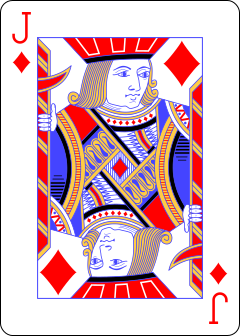
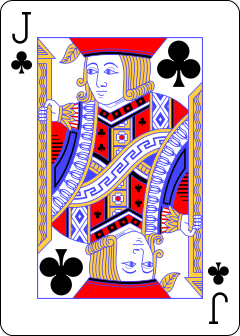
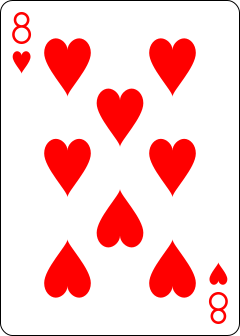
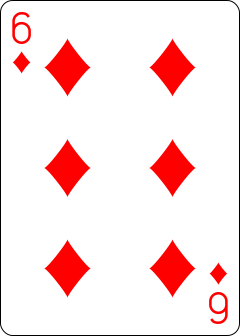
J♦ J♣ 8♥ 7♠ 6♦ 3♣ 2♥
Dealer sets the house way · no choice
The dealer never splits creatively. They follow a fixed table called the house way — a published rule for every possible seven-card combination. Same hand, same split, every time.
Dealer's high hand
5 cards · pair of Jacks, 8 high
J♦ J♣ 8♥ 6♦ 3♣
Dealer's low hand
2 cards · 7-2 high
7♠ 2♥
House way ≠ optimal
Dealers play the house way to remove decision time and accusations of favouritism. It's conservative, not optimal. With practice you can occasionally beat it — that's where Pai Gow strategy lives.
Compare and settle · closest to nine? no — both must beat
Your high hand vs dealer's high. Your low hand vs dealer's low. Win both → you win, paid 1:1 minus a 5% commission. Win one, lose one → push (bet returned). Lose both → bet collected. Tie on either hand goes to the dealer (called a copy).
High · You vs Dealer
9-9 vs J-J · dealer wins
Low · You vs Dealer
K-Q vs 7-2 · you win
Result · push. One won, one lost. Bet returned.
Section 05 · The House Way

When does a card go to the front?

You don't need to memorize this. The dealer applies these rules automatically — and most casinos let you ask the dealer to set your hand the house way too. This table just shows you what they're doing, and where you might do better.

No pair

A♠ K♥ J♦ 9♣ 7♠ 5♥ 3♦
Seven mismatched cards
High card · no pair
Best two singletons go to the low hand
You holdHouse way
Seven different cards2nd + 3rd highest to low

One pair

9♦ 9♠ A♠ K♥ Q♣ 4♥ 2♣
Pair of 9s + five singletons
A single pair
Pair stays with the five-card hand
You holdHouse way
One pair + 5 singletonsPair stays high · top two singletons low

Two pair

9♦ 9♠ 4♥ 4♠ A♠ K♥ Q♣
Two pair (9s · 4s) + three singletons
Two pair · the pivot decision
Split or keep both — depends on rank + side card
Top pair rankHouse way
2s through 6sBoth stay high (unless A in hand → split)
7s through 10sSplit (lower pair to low) unless K-or-better singleton
Js + Qs · Qs + Ks · etc.Always split
Aces + anythingAlways split — lower pair to low

Three pair · trips · monsters

Q♦ Q♠ 8♥ 8♠ 4♣ 4♦ K♥
Three pair (Qs · 8s · 4s) — promote highest
Stronger holdings
Most cases: keep the strength high, send the highest pair forward
You holdHouse way
Three pairHighest pair to low; play other two pair high
Three of a kindTrips stay high (unless Aces → split)
Full houseTrips high · pair to low
Straight · flush · straight flushKeep intact unless two pair are also present
Section 06 · Hand Rankings

What beats what.

Standard poker hand rankings, plus one Pai Gow Poker oddity at the very top — five aces, made by combining the Joker with all four natural aces.

01
Five Aces
Joker + four natural Aces. Pai Gow's invented top hand.
02
Royal Flush
A-K-Q-J-10, all the same suit.
03
Straight Flush
Five suited consecutive cards.
04
Four of a Kind
Four cards of the same rank.
05
Full House
Three of a kind plus a pair.
06
Flush
Five cards of the same suit, not consecutive.
07
Straight
Five consecutive ranks. A-2-3-4-5 is the second-highest straight in most casinos.
08
Three of a Kind
Three cards of the same rank.
09
Two Pair
Two pairs of different ranks.
10
One Pair
Two cards of the same rank.
11
High Card
No pair. Highest card breaks all ties.
Section 07 · Bets & House Edge

One bet. One commission.

Pai Gow Poker has only one main wager. It pays even money less a 5% commission on wins. The reason it isn't lower is the copy rule — when your hand exactly ties the dealer's, the dealer wins.

Win both ≈ 28.6% of hands
pays 0.95×
Push (split) ≈ 41.5%
no swing
Lose both ≈ 29.9%
−1.00×

The headline number: ~2.84% house edge if you play the house way. That's higher than baccarat Banker (1.06%) but lower than every craps proposition and most blackjack variants when played without basic strategy. The push rate is the magic — over 40% of hands settle as a push, which is why a single chip can last a remarkably long time at the table.

Banking — at most casinos a player may, when offered, be the bank for one hand. The bank wins copies and earns the house's edge against everyone else, but pays the same 5% commission. It's the only spot where Pai Gow Poker tilts in your favour.

Side bets — same advice as everywhere else

Casinos offer Fortune Bonus, Pai Gow Insurance, Progressive side bets. House edges typically run 7% to 25%. Skip them. Your one main bet at 2.84% is already the best math at the table.

The math, in one sentence
Play the house way, take the bank seat when offered, and ignore every side bet. That's the entire short-term strategy.
Section 08 · Splitting Strategy

When to deviate from the house way.

The house way is conservative. With a few simple deviations you can shave the edge down a bit further — and play better than the dealer is forced to.

The truth
No splitting strategy turns Pai Gow Poker into a winning game against the house. What it does is reduce variance, extend your session, and minimize the cost of being entertained. The bank seat is the only positive-edge spot — take it.
Section 09 · Live Simulator

Sit down. Set a hand.

Everything you've just read, in a live deal. Tap two cards to send them to your low hand — the rest become your high. Hit "Set hand" to compare against the dealer.

Pai Gow Poker · Live
53-card deck (Joker semi-wild) · Wins pay 0.95:1 · Copies go to dealer
Bankroll
$1,000
How it plays

You and the dealer each get seven cards. Pick two for your low hand (the rest become your high hand). Your high hand must outrank your low hand or it's fouled. Both your hands are compared to the dealer's. Win both → win. Win one → push. Lose both → lose. Exact ties on either hand go to the dealer.

Awaiting deal
Place a bet to deal
Your high · 5
Your low · 2
Coach Place a bet, then deal.
Place a bet to begin the shoe.
Hands
0
Wins
0
Pushes
0
Losses
0
Net
$0
Place a bet and deal to begin.
Section 10 · Focus

Before you sit down.

Rules and odds tell you how the game works. These habits decide how long your bankroll lasts and what you walk away with.

  • Math One main bet, no side bets. The base game runs at ~2.84% edge. Every side bet — Fortune, Insurance, Progressive — pushes that into double digits. Stick to the simple wager.
  • Tempo Pai Gow is slow. Forty percent of hands push, which means an average $25-bettor sees $25 swing back and forth across an hour. That's the appeal. Don't fight the tempo by betting bigger to feel something.
  • Sizing Keep your base bet at 2% of bankroll or less. A $500 session means $5 to $10 chips. With Pai Gow's high push rate, that's enough to play for hours.
  • Bank Take the bank when offered. Banking flips the copy rule in your favour and lets you absorb the table's edge. The only consistently positive-EV spot in Pai Gow Poker.
  • The rule Set a loss limit and a win target before you sit. When you hit either, you leave. The push rate makes Pai Gow a uniquely sticky game — you can play for hours without crossing either line, and that's how casinos eventually win.
Bonne chance.
— La maison salue ses joueurs